Water Doesn't Belong Against Your Foundation
Pooling in the yard, running toward the house, or washing out the driveway every spring? Drainage that lasts is not just dug and backfilled. It is sized for your soils and water volume, then built to keep working through freeze-thaw and mud season.Pooling yards, wet foundations, washed-out driveways. Drainage sized for your soils and built to last.
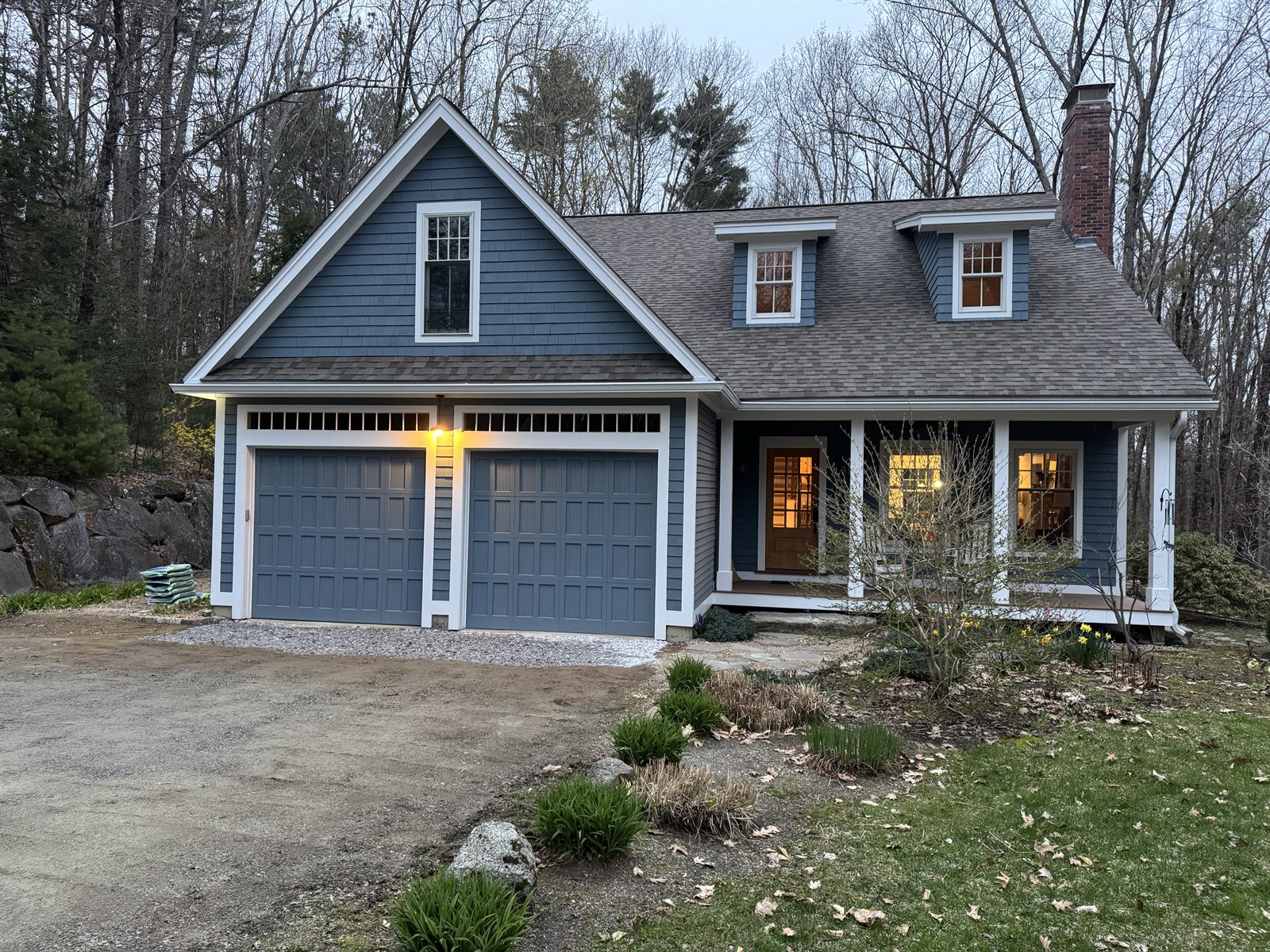
Sized for Your Site, Not Guessed
Most drainage fails because the stone disappears into the soil, the grade is wrong, or the system was never matched to how much water the site actually moves. GSS designs around the things that determine whether it lasts.
Three things decide whether drainage lasts. GSS builds around all three.
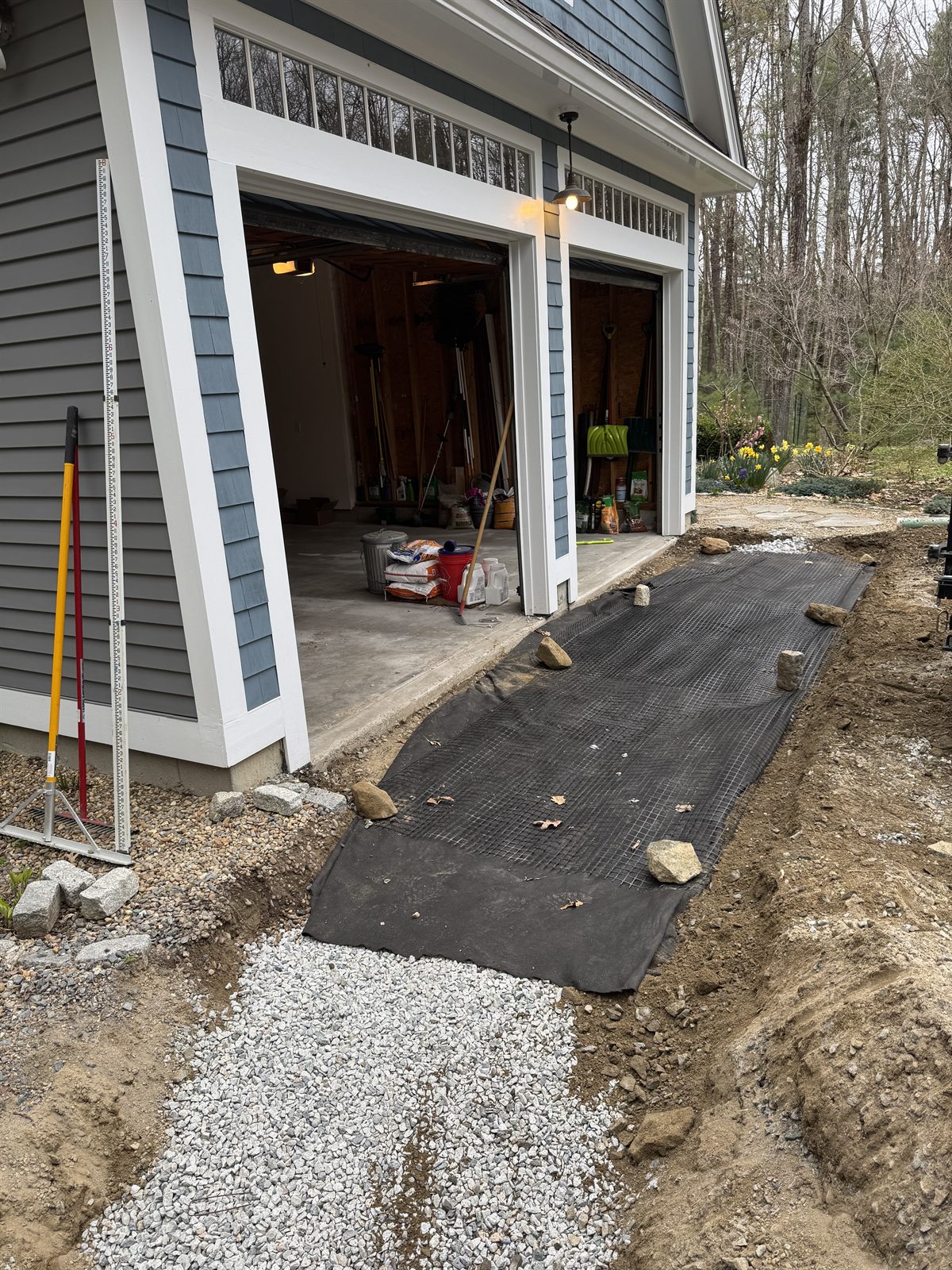
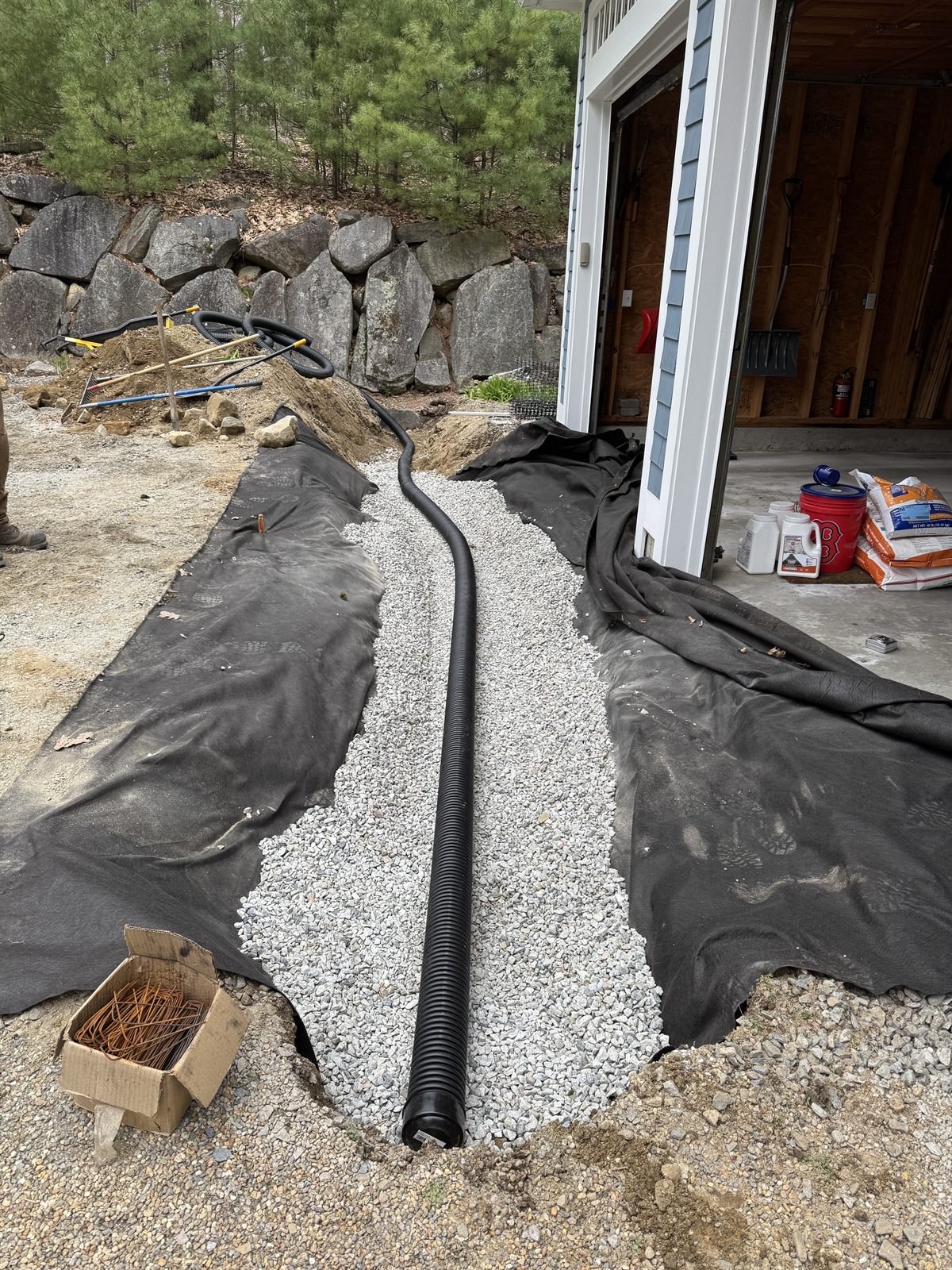
Geotextile + Stone + Pipe
A "burrito wrap" of geotextile fabric around clean drainage stone with a perforated pipe at the core. Soil can't migrate in and clog the system, so it drains for decades, not seasons.
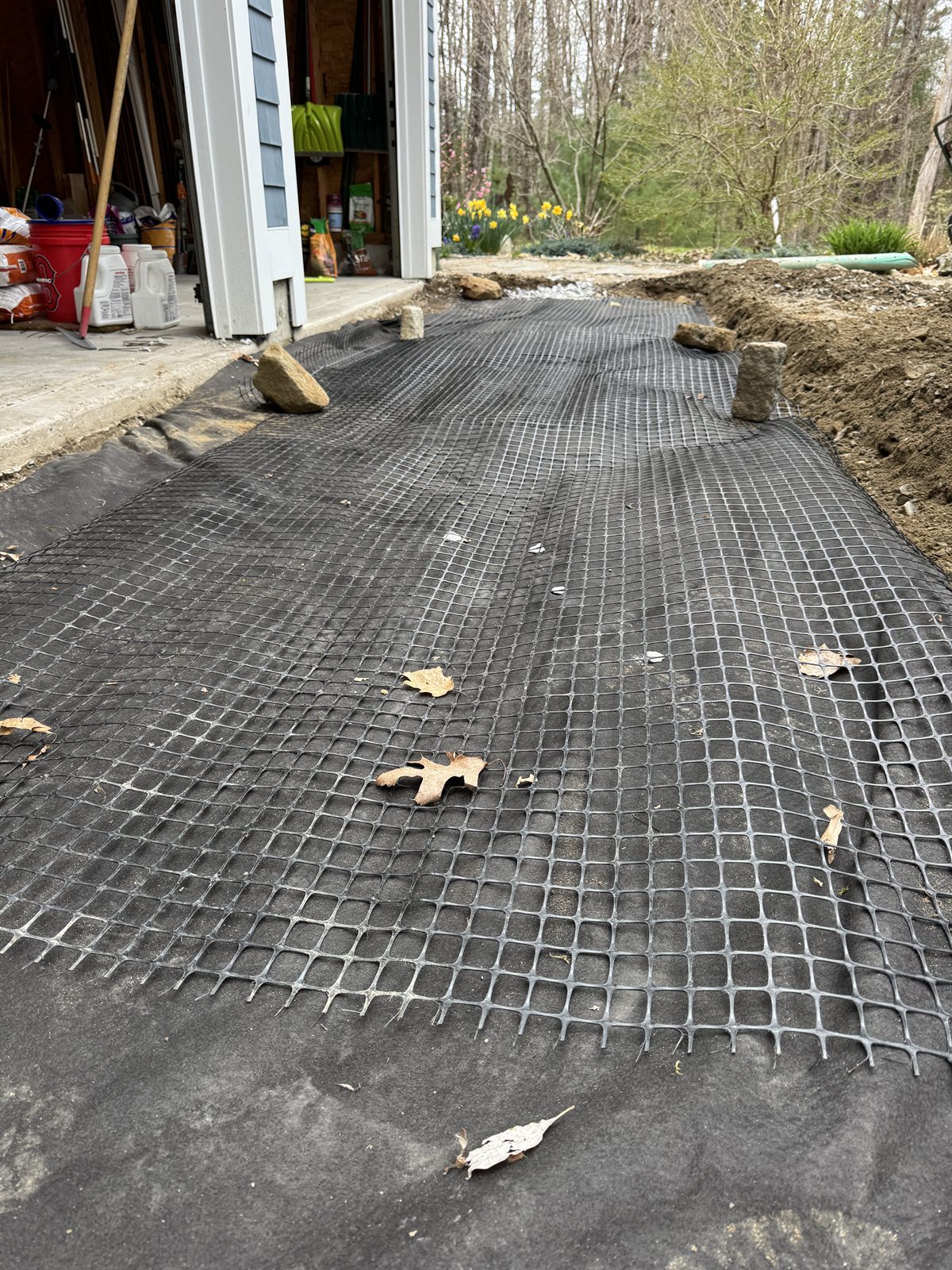
Geogrid for Traffic Surfaces
Where the surface carries vehicles, geogrid locks the base into a stiff mat that spreads the load and holds shape through frost heave. The same approach used on our driveways and access roads.
Grading That Moves Water
Every surface is graded to send water to a controlled outlet, not just vaguely "away" where it comes right back.
What We Solve
- Yard and lawn drainage for standing water and soggy spots
- Foundation & perimeter drainage to keep water off the house
- Driveway washout repair and surface-water control
- Slope stabilization and erosion control
- Catch basins, outlet structures, and swale systems
- Agricultural field and access drainage
Good Drainage Is a Water-Quality Decision
Moving water off your property is only half the job. The other half is where it ends up. On the Seacoast, almost every yard drains toward a Great Bay tributary, so how a system handles water decides what reaches the water everyone shares.
On the Seacoast, almost every yard drains toward Great Bay. Where your water ends up matters.
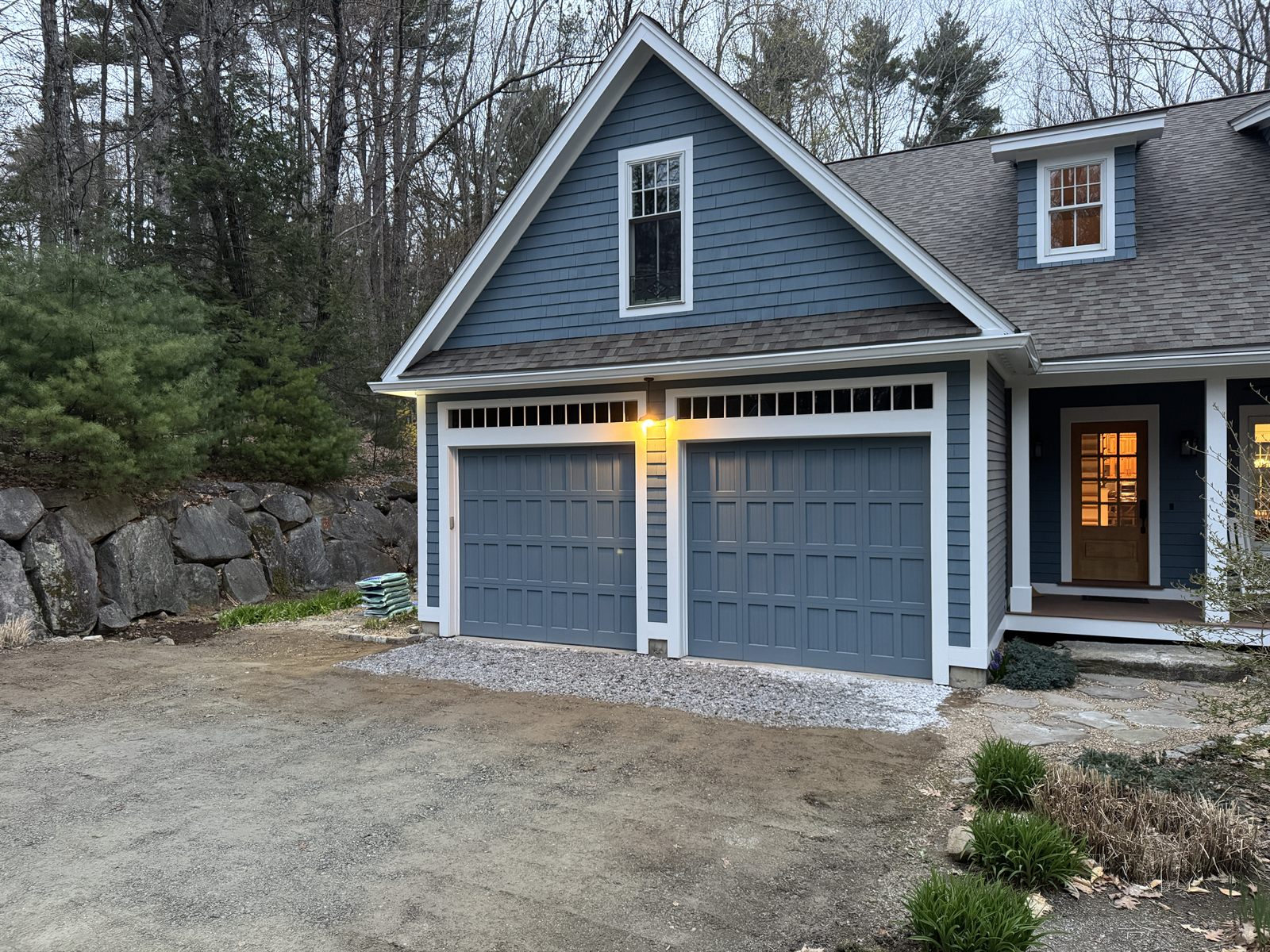
Into the Ground, Not the Street
Where soils allow, GSS designs systems that let rain soak in and recharge the ground rather than rushing it to the storm drain. Healthy, uncompacted soil is the cheapest stormwater tool there is, and it works year after year.
Cleaner Water Downstream
Slowing and filtering runoff drops the sediment, lawn nitrogen, and phosphorus it carries. Great Bay is under a nitrogen-reduction effort, and what leaves your yard is part of that total. A drainage plan can quietly do its part.
A Dry Foundation Lasts Longer
Steering water away from the house protects the foundation, the basement, and the soil around it from constant saturation. The structure stays sound, and the ground beside it stops slumping and staying wet.
A Site-First Plan Before Anything Gets Dug
Drainage that lasts is matched to how water actually moves across your site, what your soils will and will not absorb, and where the water can safely go. Every GSS engagement starts with a written plan grounded in those facts. The plan is a paid deliverable that belongs to you. If you book the build with GSS within twelve months, half of what you paid for the plan comes off the build price.
Every project starts with a written plan you own. Book the build within a year and half the plan fee comes off the price.
Drainage Plan, Lite
For homeowners who want a clear read on what is failing and why before any contractor starts digging.
Flat fee $850
- Site walk, soil and water-flow assessment, problem-area mapping
- Written read on where the water comes from and why the yard holds it
- Recommended approach with interception, conveyance, and outlet specified at strategy level
- One review conversation after the plan is delivered
Drainage Plan, Full
For homeowners who want a measured plan they can build from, with or without GSS doing the work.
Flat fee $1,950
- Everything in Lite, plus a measured site plan
- Grades and flow paths mapped, with a controlled outlet identified
- Sized system: trench, pipe, and infiltration where the soils support it
- Permitting notes for wetland and shoreland buffers where they apply
- One revision after your review
Resource stewardship sits at the center of every plan. The goal is to keep water off your foundation and out of your yard while sending cleaner water, not more of it, to the streams downhill. More on soil health →
Typical Drainage Ranges
The ranges below are typical for the Seacoast NH residential drainage work GSS does. Soil type, how much water the site moves, access, and how far it must travel to a good outlet all move the final number.
Typical ranges for Seacoast NH residential drainage. Every quote is fixed-price before work begins.
Wet-Spot & Yard Drainage
One soggy area, a low spot that stays wet, or downspout and surface water with nowhere to go.
Starts around $3,500
- Geotextile-wrapped stone-and-pipe interception
- Regrading to move surface water to a controlled outlet
- Infiltration where the soils support it
Foundation & Perimeter Drainage
Water working toward the house, a damp basement, or a failed drain at the garage or foundation.
Typically $6,500 to $15,000
- Perimeter interception in a geotextile burrito wrap
- Solid pipe to a daylight or catch-basin outlet
- Regraded, compacted apron that sheds away from the house
Whole-Yard Water Management
A property that moves water across several areas and needs a coordinated system, not one patch.
Typically $12,000 to $30,000
- Swales, catch basins, and tied-together outlets
- Grading that routes the whole site, not one corner
- Infiltration and slow-release features to protect what is downstream
Final pricing depends on soil conditions, water volume, equipment access, outlet distance, and any wetland or shoreland permitting. All quotes are fixed-price or not-to-exceed before any work begins.
Foundation & Yard Drainage
Dealing With Water Where It Shouldn't Be?
Todd will walk your property, evaluate the soils and drainage patterns, and give you a written scope and price. Free, within an hour of Newfields, NH.