A Great Lawn Starts With the Soil
Most lawn services seed over tired, compacted ground without fixing what is underneath. GSS corrects the soil first, prepares a proper seedbed, then matches the right seed to your site, with clover and native lawn options when you want less mowing and watering.
Why Lawns Fail — and How We Fix Them
Patchy, mossy, or bare turf is almost always a soil problem, not a seed problem. With a PhD in agricultural and biological science, Todd treats the cause, not the symptom.
Test & Correct the Soil
Soil testing drives a real plan — pH, nutrients, and organic matter corrected with split applications, so the new grass has something to grow in. More on soil health →
Prepare the Seedbed
Dethatching, grading, and proper seedbed prep — the foundation everyone skips — followed by the right seed mix for your sun and site, applied at the right rate.
Establish & Protect
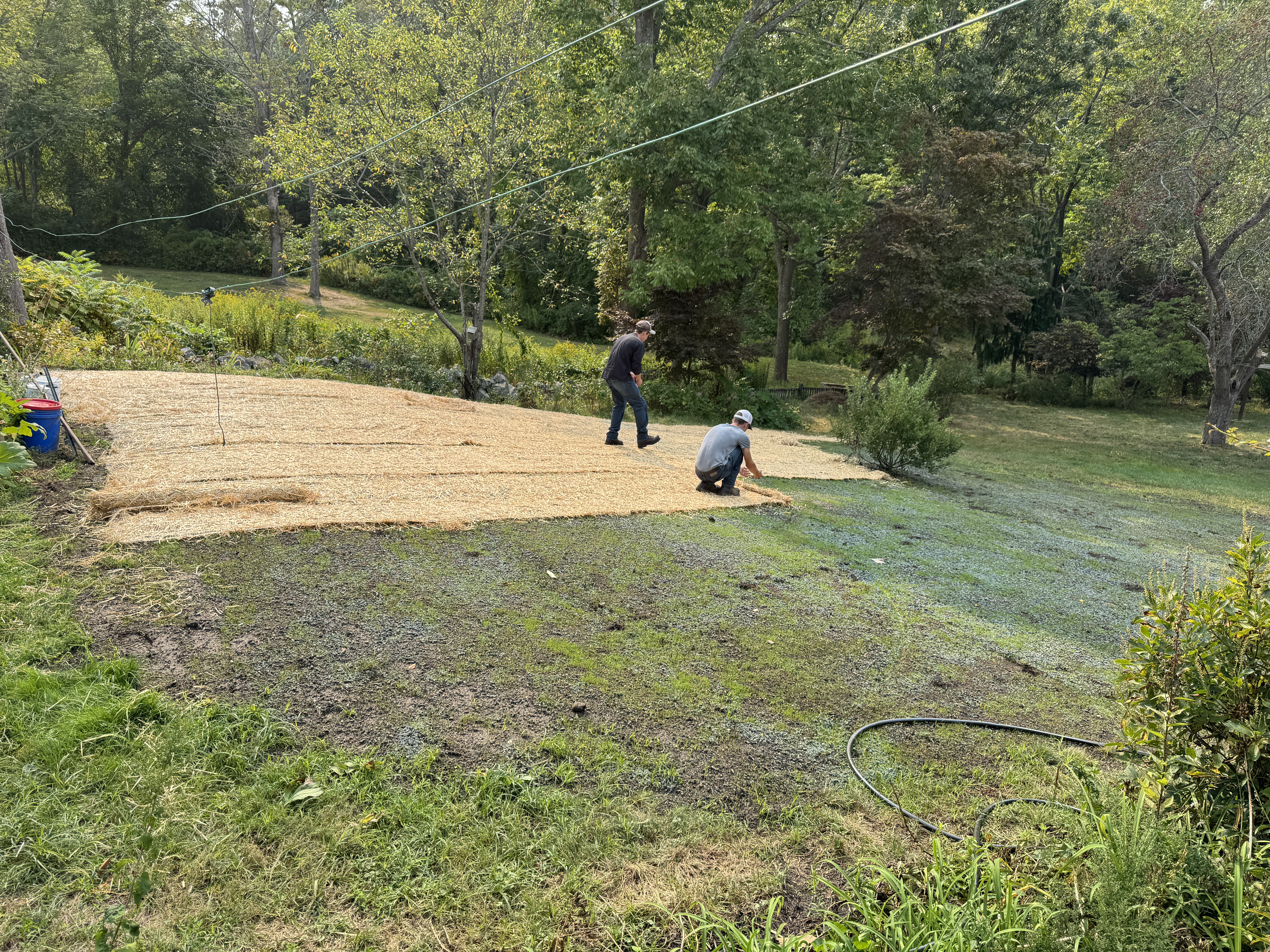
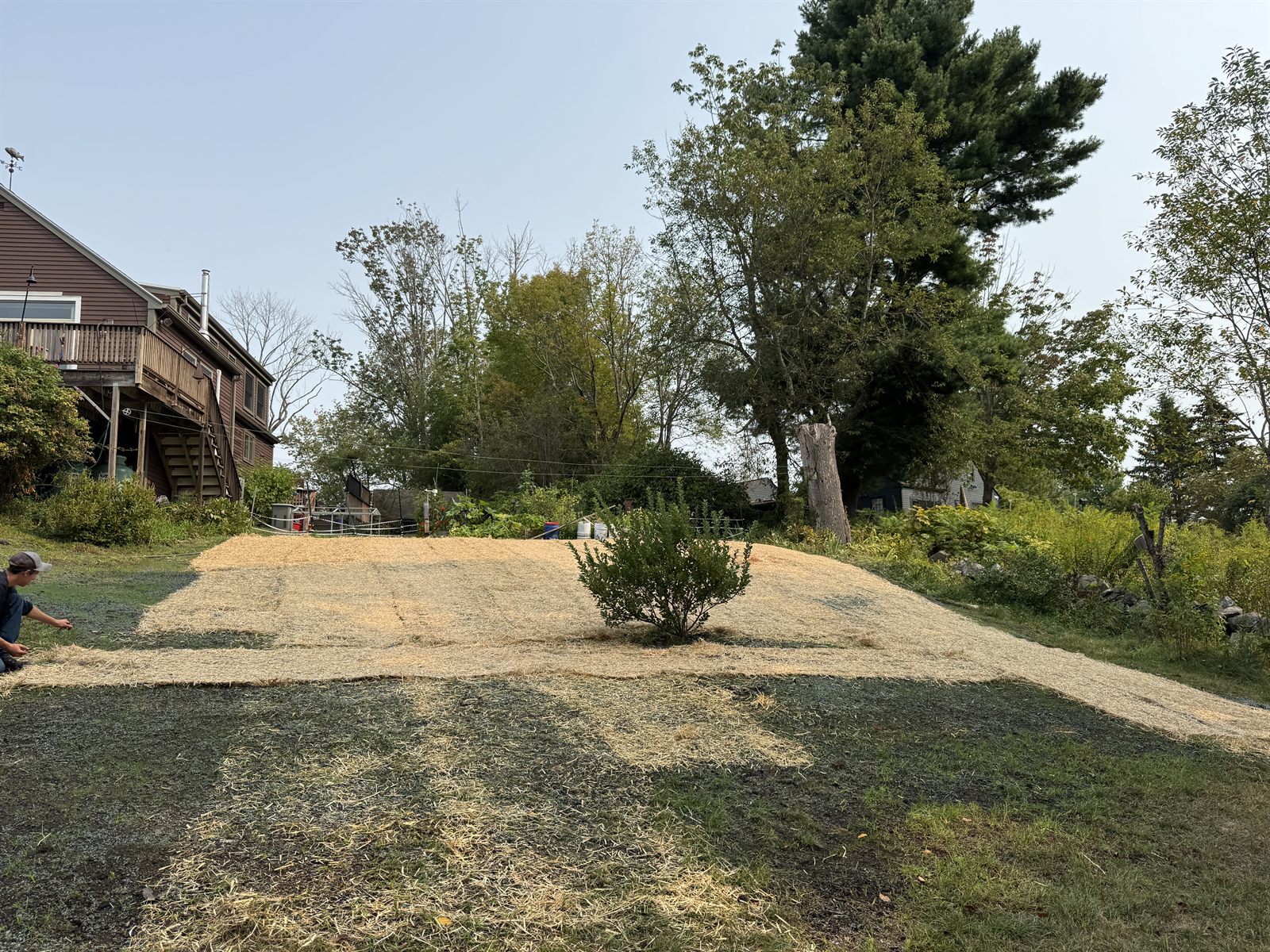
Hydroseed and mulch hold moisture and protect the seed while it establishes, with a clear plan for watering and the first feedings.
An Alternative Lawn, Built on Living Soil
A traditional turf lawn is a maintenance contract with chemistry: weekly mowing, fertilizer, irrigation, and sometimes herbicides, all to keep a green carpet that does almost nothing for the land underneath. A native alternative lawn does the opposite. NH-native perennials and groundcovers, rooted in corrected soil, give you a yard that looks intentional, supports pollinators and birds, holds rainwater on site instead of shedding it to storm drains, and asks for a fraction of the inputs.
Every GSS plan leads with NH-native species, follows a written soil correction protocol, and never specifies a plant on New Hampshire's invasive species list. That standard is not negotiable.
- NH-native perennial palette designed for your sun, soil, and traffic
- Pollinator and bird habitat built in from the first plan
- Improved stormwater infiltration, less runoff to Great Bay tributaries
- Soil tested and corrected before any planting goes in
- White clover available as a low-input option where natives won't meet the use case
A Native Lawn Is an Environmental Choice
The Seacoast is one of New Hampshire's most ecologically loaded landscapes. Great Bay sits downstream of every yard between Newfields and Portsmouth. What runs off your lawn matters. So does what grows on it.
Habitat That Actually Works
Native perennials and groundcovers feed New Hampshire's native bees, butterflies, and seed-eating birds. Turf feeds none of them. A small native-plant yard typically hosts more pollinator visits in a single morning than an entire block of traditional lawn.
Water in the Ground, Not on the Street
Deep-rooted natives and healthy soil pull rain down through the profile instead of shedding it. That keeps lawn nitrogen and stormwater out of the storm drain system, which is exactly what Great Bay's nitrogen reduction targets are asking property owners to do.
Less Input, More Resilience
An established native lawn shrugs off summer drought, handles wet springs without drowning out, and does not need rescue feedings. Lower water bills, fewer chemical inputs, and far fewer hours behind a mower burning gas.
Soil Health Is Not Optional
Every native lawn that fails in New England fails for the same reason: someone planted into the wrong soil. Clay that drowns the roots. Compacted fill that suffocates them. Acidic forest soil that locks up nutrients. Road salt that burns the leaves. None of that is a plant problem. It is a soil problem, and it is solvable.
What GSS Tests Before Planting
- pH and lime requirement, with correction lead time built into the schedule
- Organic matter percentage and compost requirement
- Soil texture (sand, silt, clay) and water infiltration rate
- Compaction depth and whether subsoil ripping is needed
- Salt impact zones near roads and walkways
- Existing weed flora as an indicator of underlying conditions
How Soil Findings Shape the Plan
A heavy clay site does not get the same build as a sandy coastal lot. Acidic forest soil needs lime applied months before planting, not the day of. Compacted urban fill needs a deep rip before any seedbed work. The plan, the schedule, and the price all bend around what the soil actually is.
Every GSS proposal explains the soil findings, the corrections required, and how those corrections shape the build timeline. More on soil health →
From Bare Soil to Established Lawn
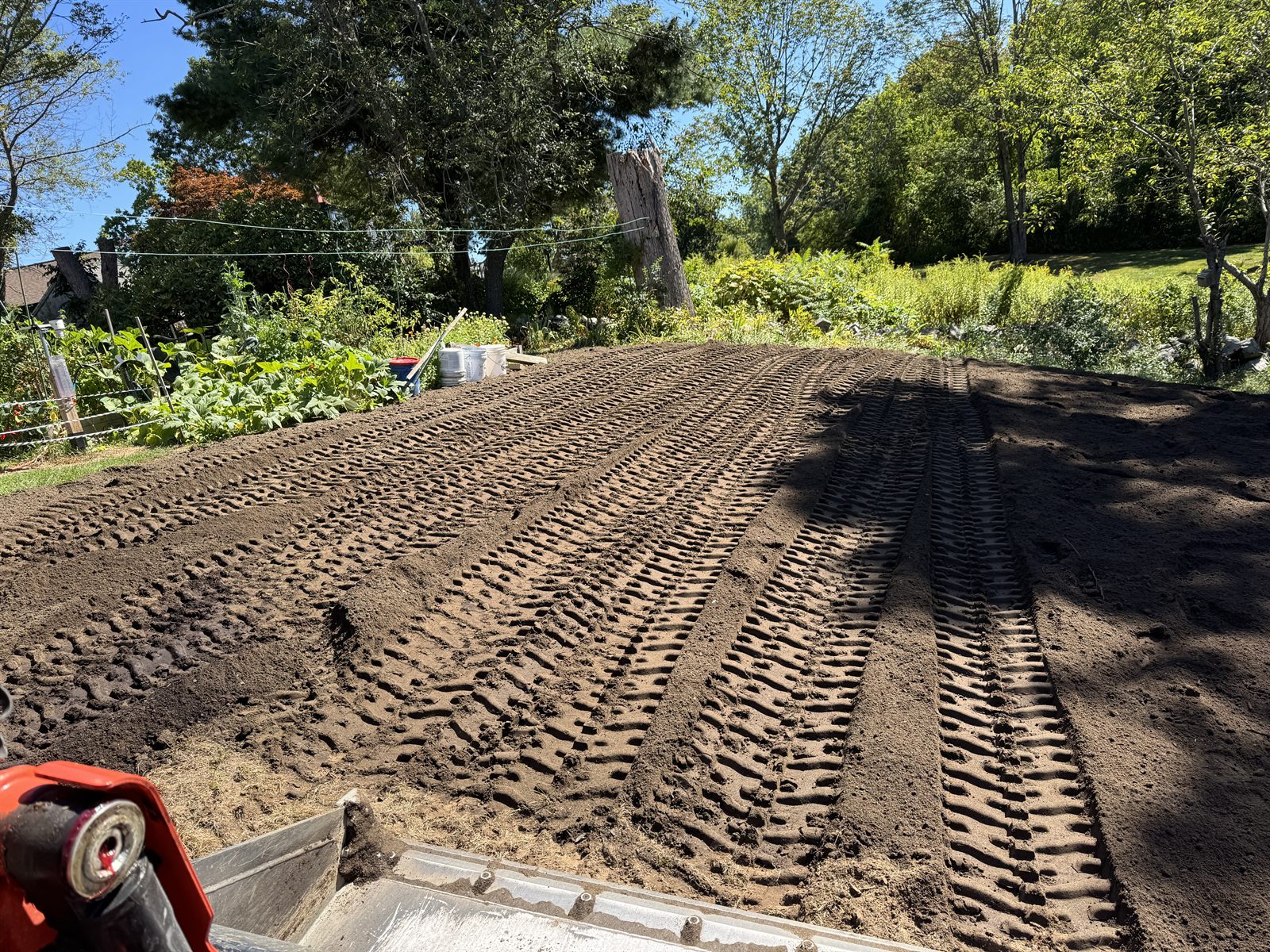
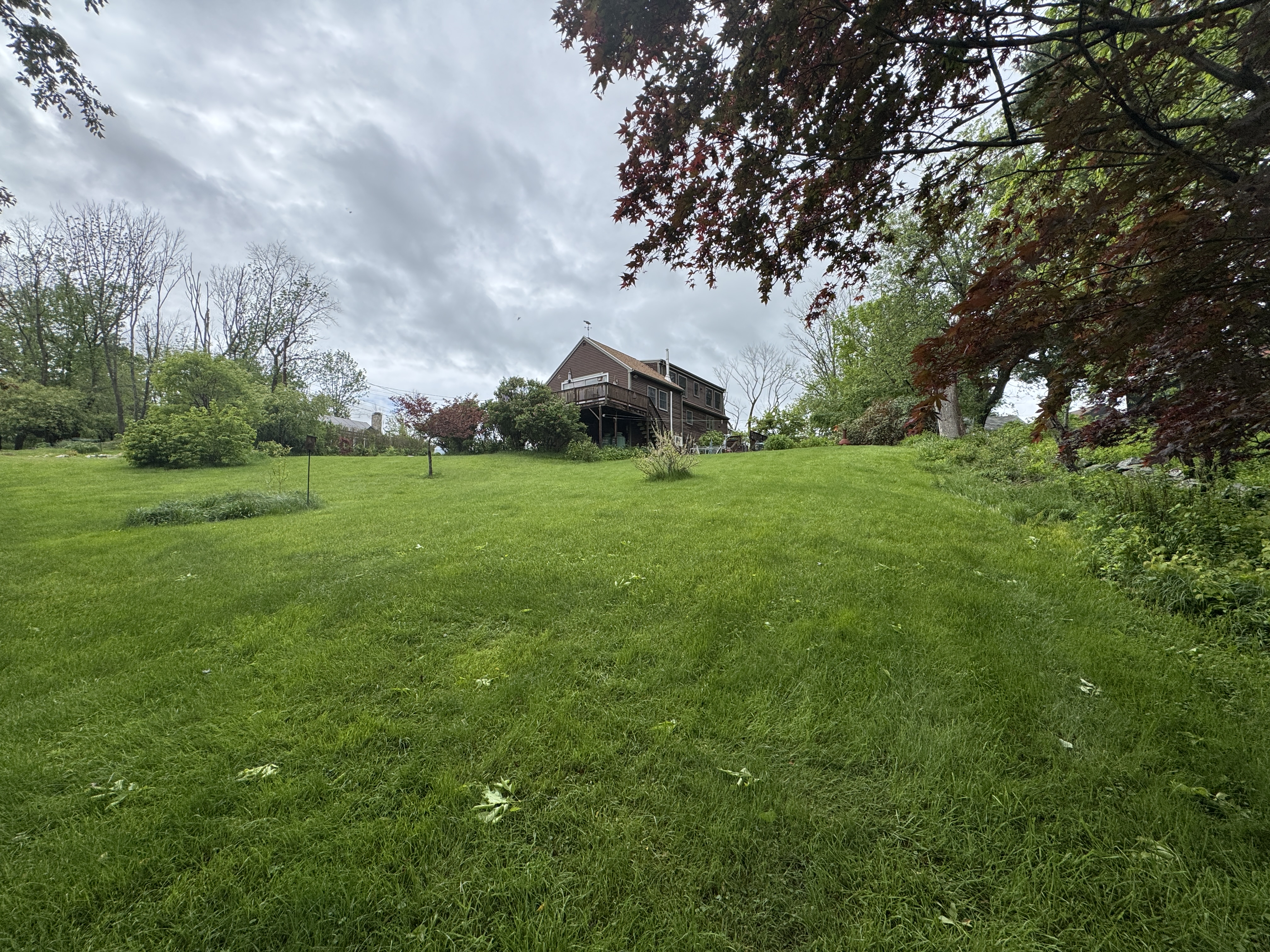
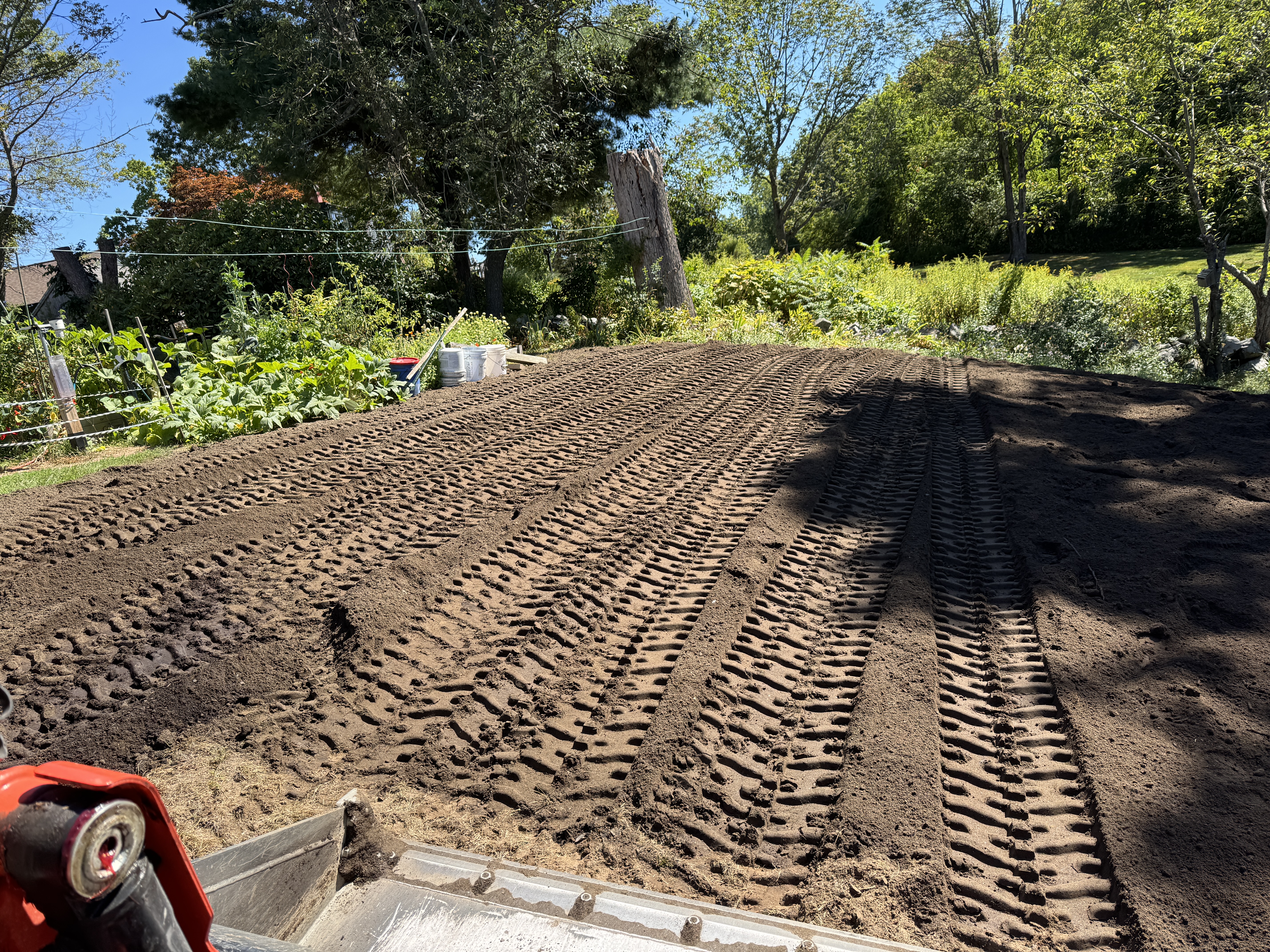
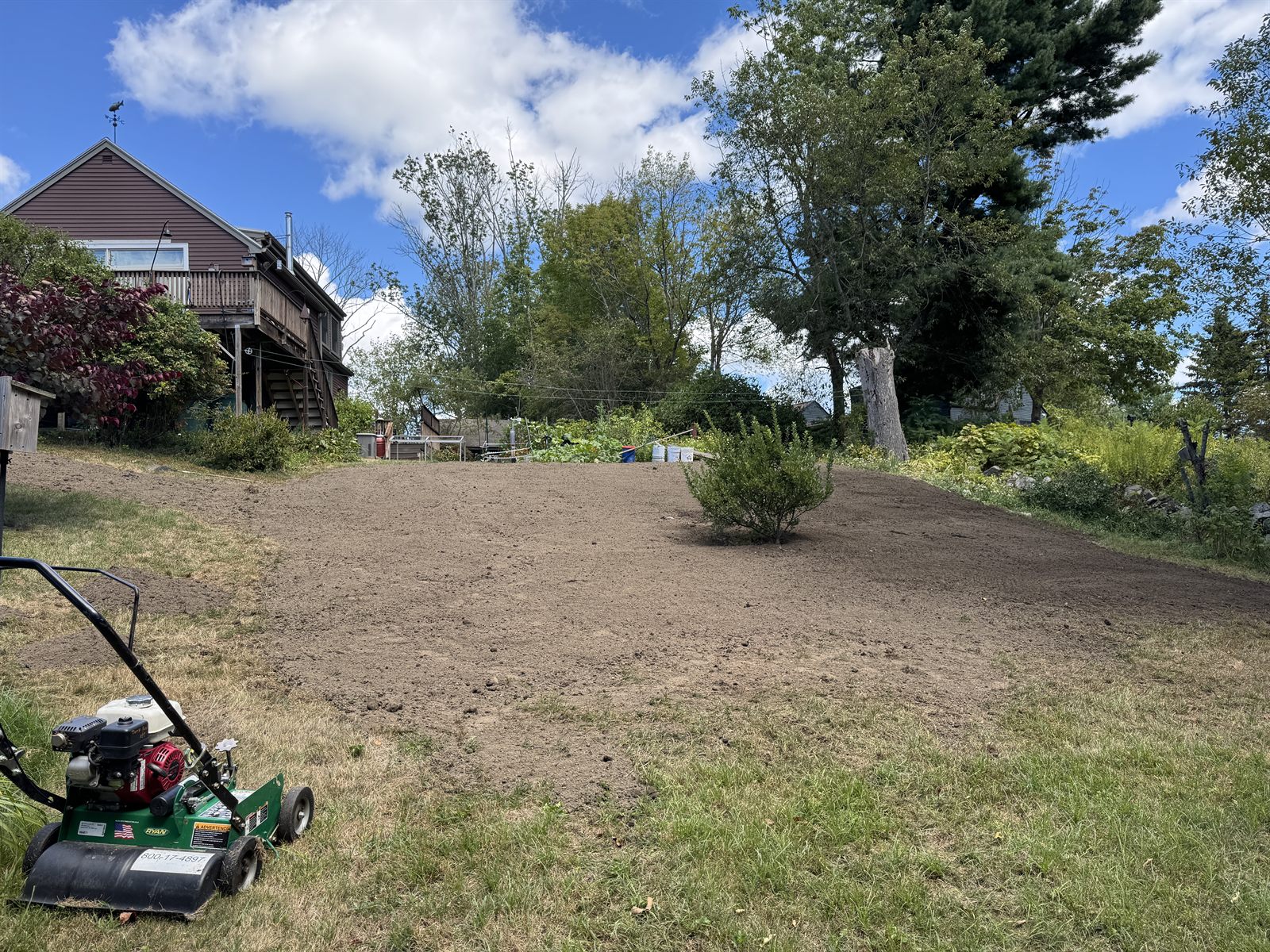
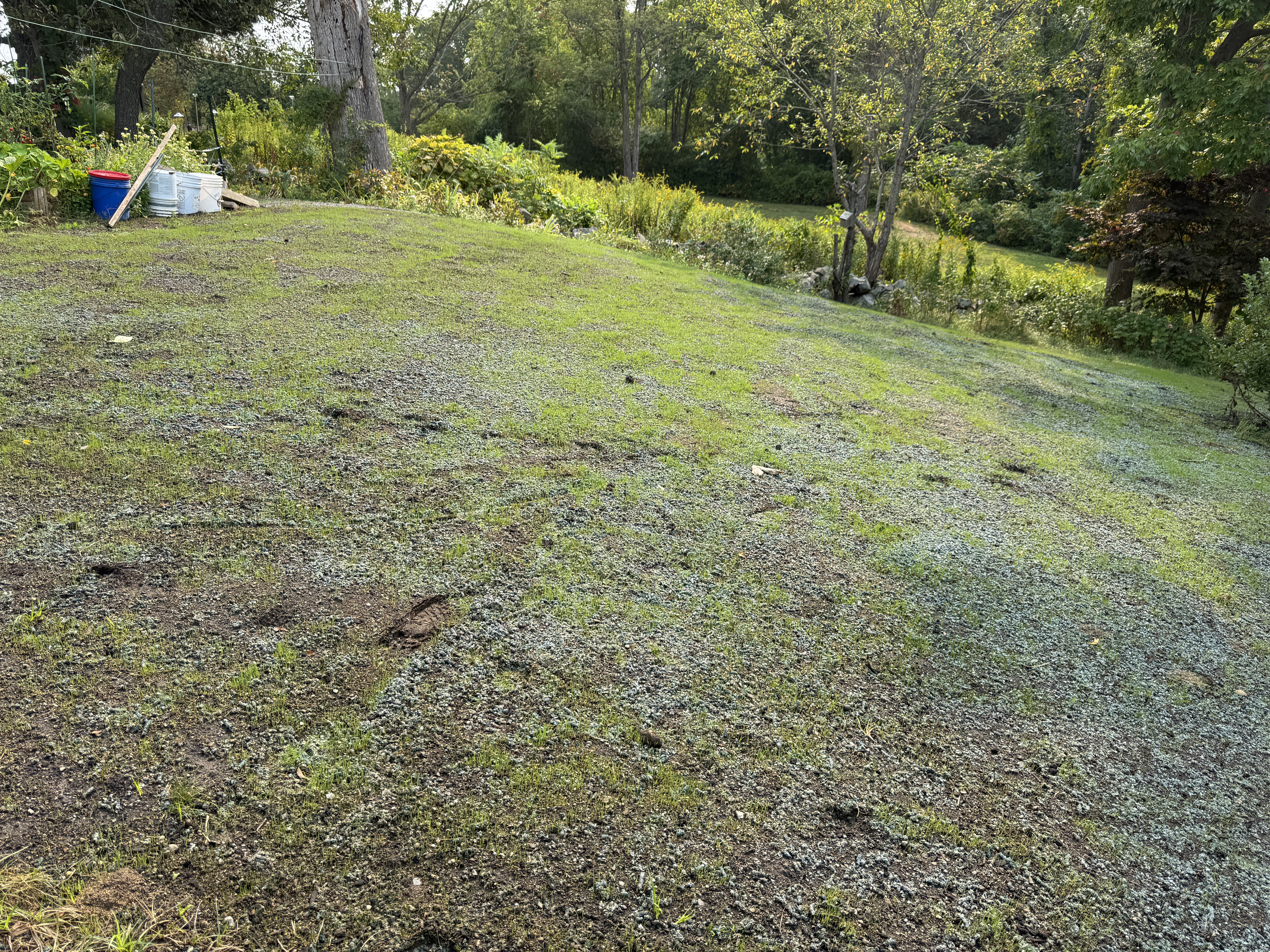
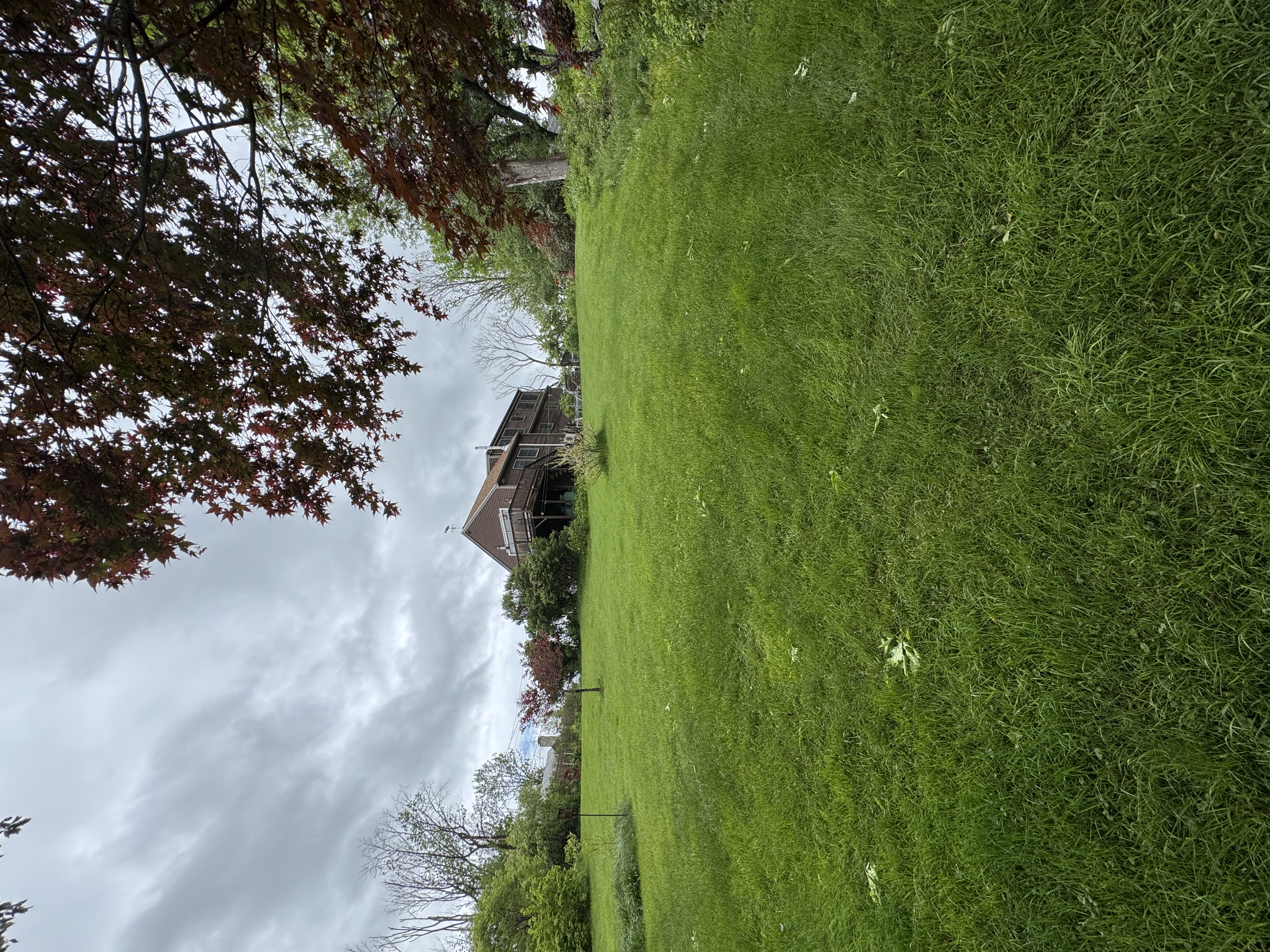
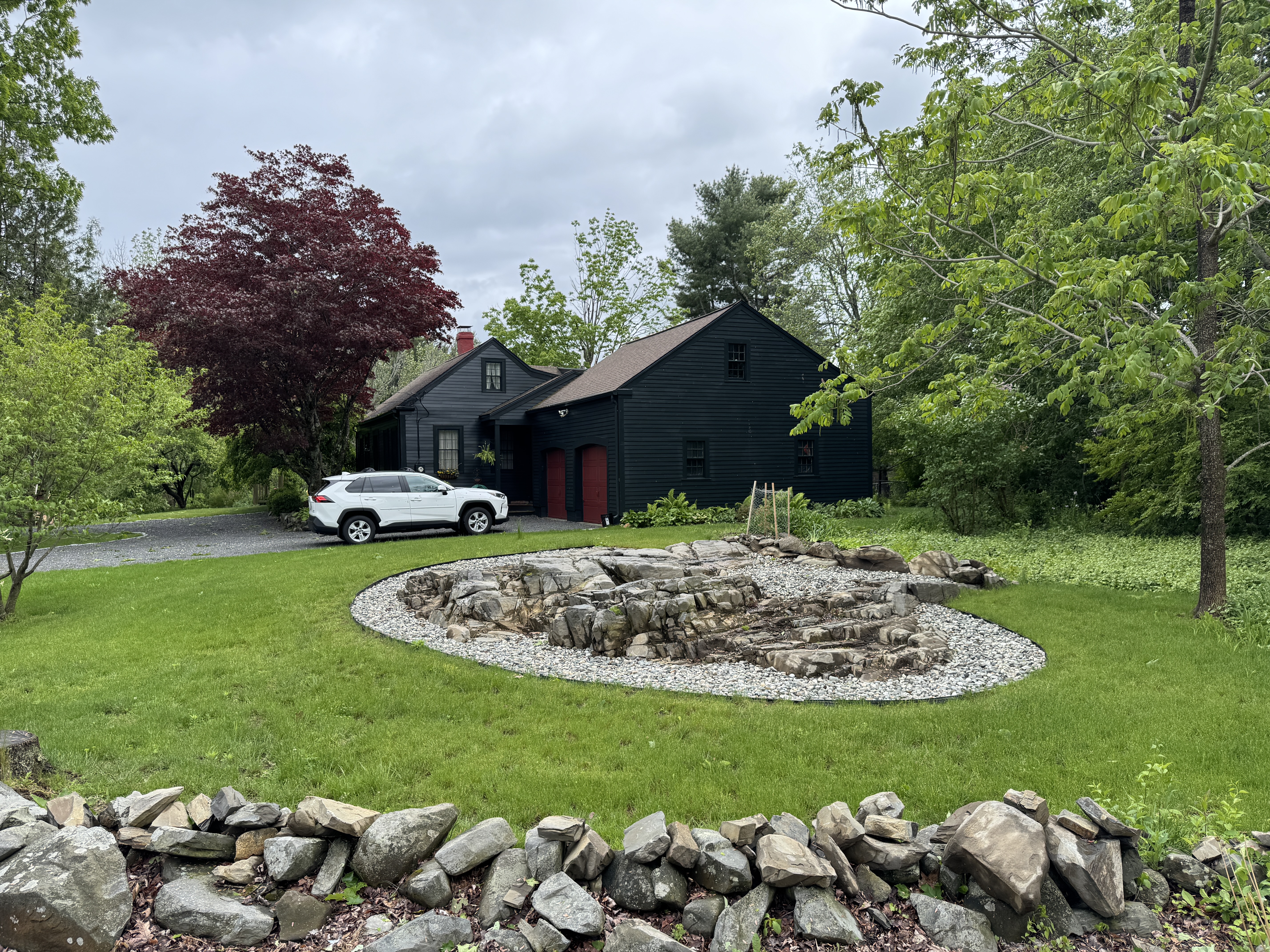
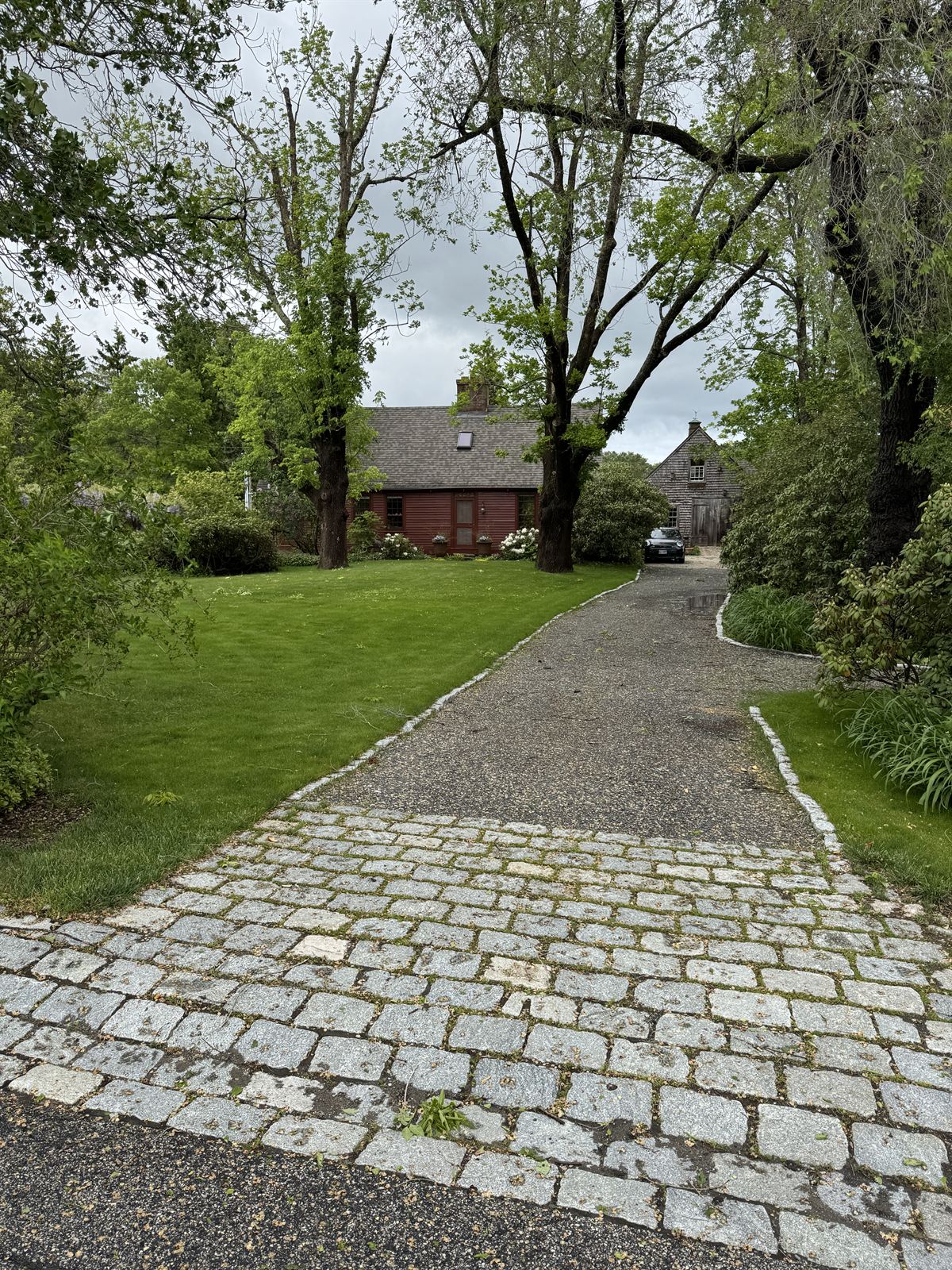
Same yard, same vantage. Tilled and corrected in late summer, hydroseeded and mulched, then green and established the following season, because the soil underneath was rebuilt first.
Typical Lawn Renovation Ranges
The ranges below are typical for the Seacoast NH lawn work GSS does. Slope, soil, sun, and what is already in the ground all move the final number.
Soil Correction & Overseed
Smaller lots, lawn that's mostly there but tired or patchy.
Starts around $1,500
- Professional soil test & correction plan
- Aeration, dethatching, light grading
- Overseed and starter feeding
Full Renovation & Hydroseed
Worn-out or partly bare lawns up to roughly a half-acre.
Typically $3,500 to $7,500
- Soil test, correction, organic-matter build
- Till, regrade, and properly prepared seedbed
- Hydroseed with straw mulch & first-feeding plan
Native Perennial Lawn (clover optional)
NH-native palette designed for your site. Pollinator habitat, cleaner stormwater, less mowing. White clover available as a lower-cost option where natives don't fit.
Typically $4,500 to $10,000
- Soil tested and corrected first, no shortcuts
- NH-native plant palette, zero invasive species
- Establishment plan and first-year monitoring
Final pricing depends on site size, soil condition, access, and whether drainage or grading is part of the scope. Quotes are fixed-price or not-to-exceed before any work begins.
Rather Build It Yourself? Start With a Plan
Not every homeowner wants a crew in the yard. If you would rather do the work yourself, or phase it over a few seasons, GSS can put the thinking on paper first. The plan is a paid deliverable grounded in your actual soil: what to correct, what to plant, and in what order, so your own labor goes to work in the right place. If you later decide to have GSS do the build within twelve months, half of what you paid for the plan comes off the build price.
Lawn Plan, Lite
For homeowners who want the thinking on paper before any equipment shows up, and plan to handle parts of the work themselves.
Flat fee $850
- Site walk, professional soil test, and a written interpretation
- Soil-correction strategy calibrated to your test results
- Phased seasonal roadmap that respects soil and water cycles
- One review conversation after the plan is delivered
Lawn Plan, Full
For homeowners who want a measured plan they can build from at their own pace, with or without GSS doing the work.
Flat fee $1,950
- Everything in Lite, plus a measured site plan
- Sun, slope, and drainage layered into the design
- NH-native species palette matched to your soil and your goals, no invasives ever
- Establishment calendar and first-year monitoring plan
- One revision after your review
Soil health and resource stewardship sit at the center of every plan. The goal is a lawn that asks less of the land each year, not more. More on soil health →
How the Renovation Goes
Patchy, Mossy, or Worn-Out Lawn?
Todd will walk your yard and tell you honestly what it needs: a soil correction, a full renovation, or a NH-native lawn alternative. Free, within an hour of Newfields, NH.