Stop Re-Graveling Your Driveway Every Year
If you add a few yards of gravel every spring, the driveway was not built to last. GSS builds driveways, farm lanes, and access roads with the layers that hold up, so you build it once instead of paying for it every year.
It's What's Under the Stone
Most gravel driveways fail for one reason: nothing keeps the stone and the soil apart. The gravel sinks into the mud, ruts form, water pools, and the cycle repeats. GSS builds in the layers that break that cycle.
Real Mineral Subbase
Most driveway fails start before any stone goes down. Strip the organic muck, work down to true mineral soil, compact it, and grade it. Everything above only works if this part was done.
Geogrid + Compacted Base Stone
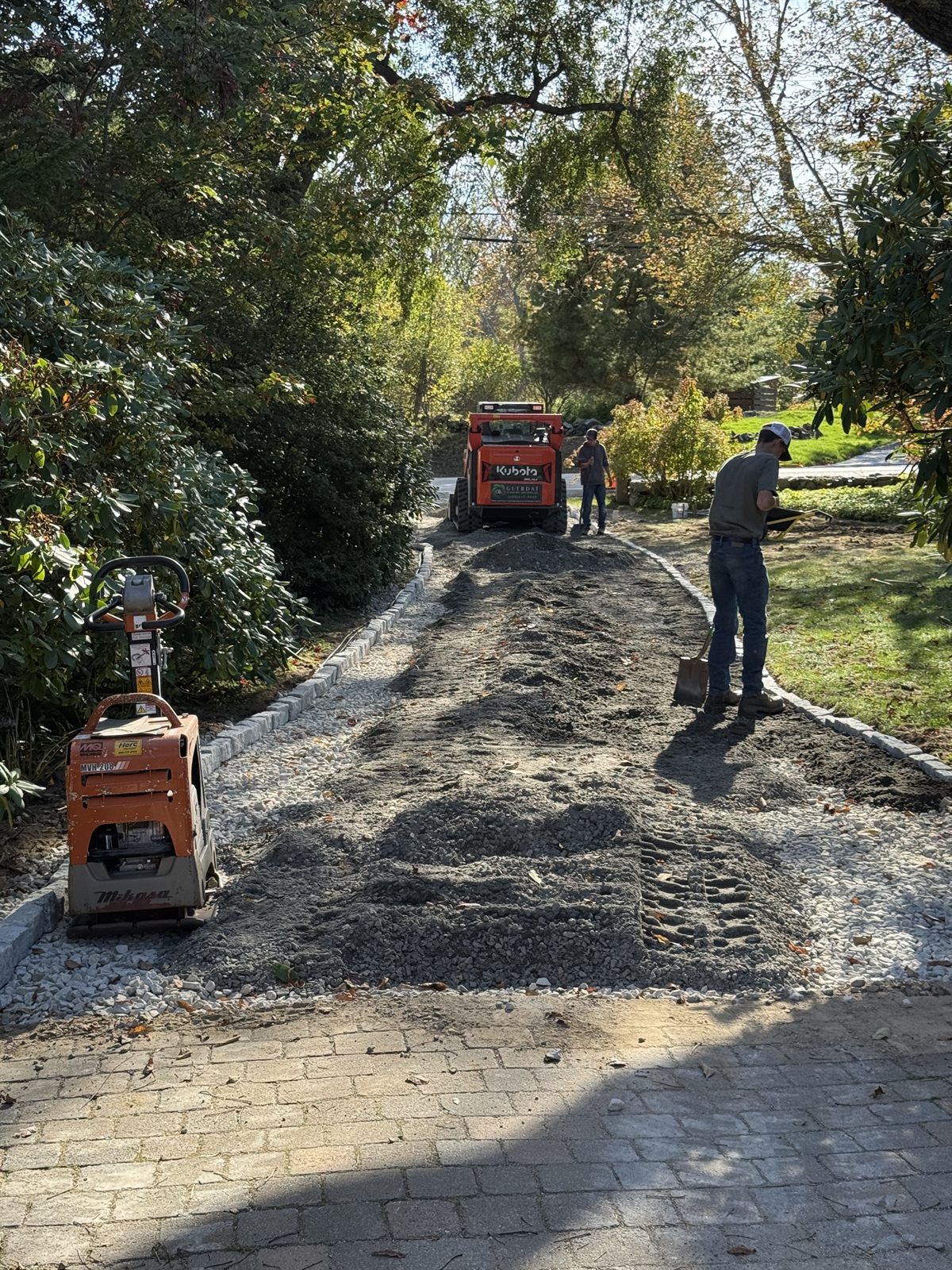
Geogrid sits directly on the prepared subbase and locks the base stone into a stiff mat that spreads tire load across a much wider area, the same approach used under roads on soft ground.
Crown & Granite Aprons
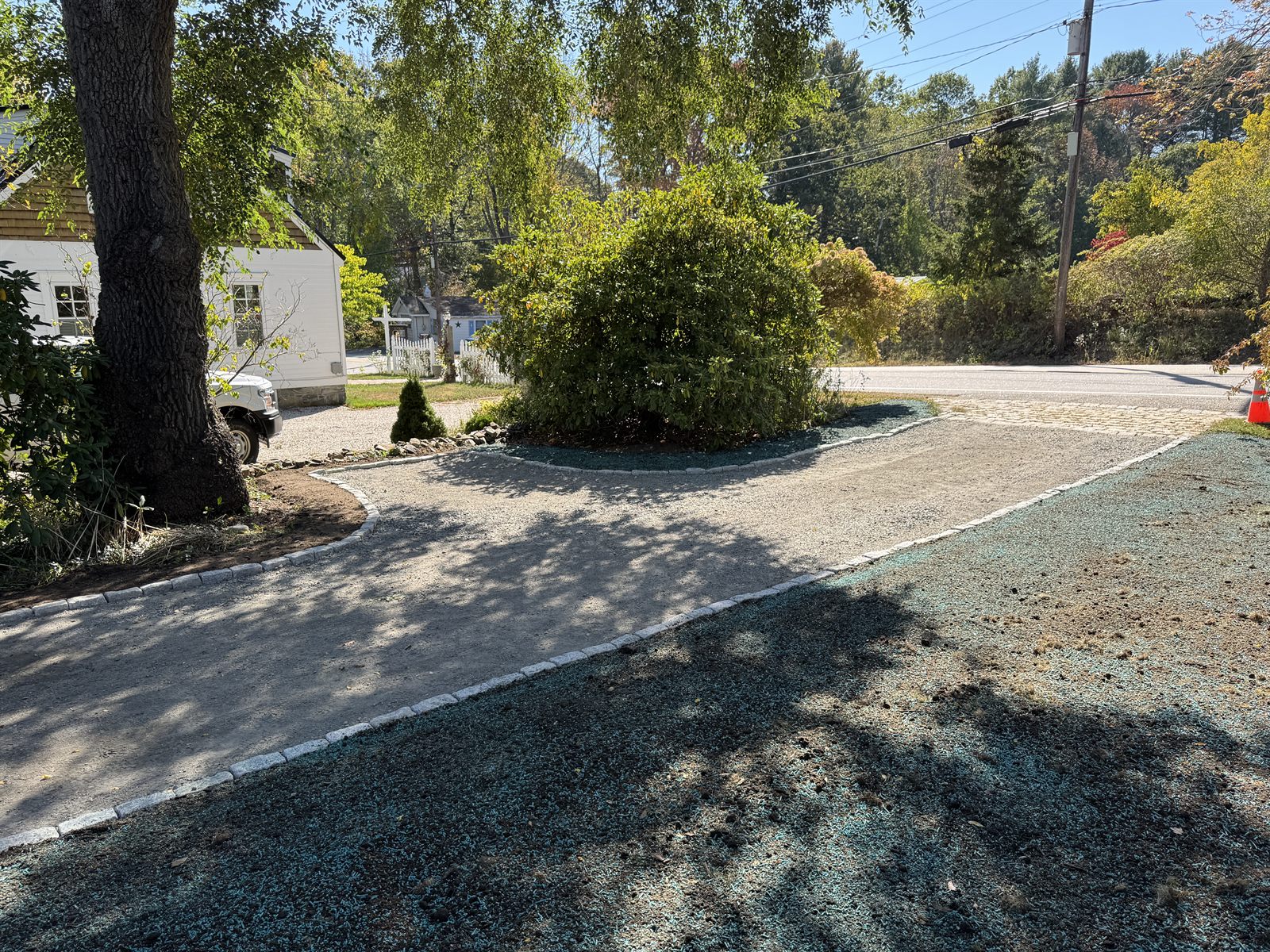
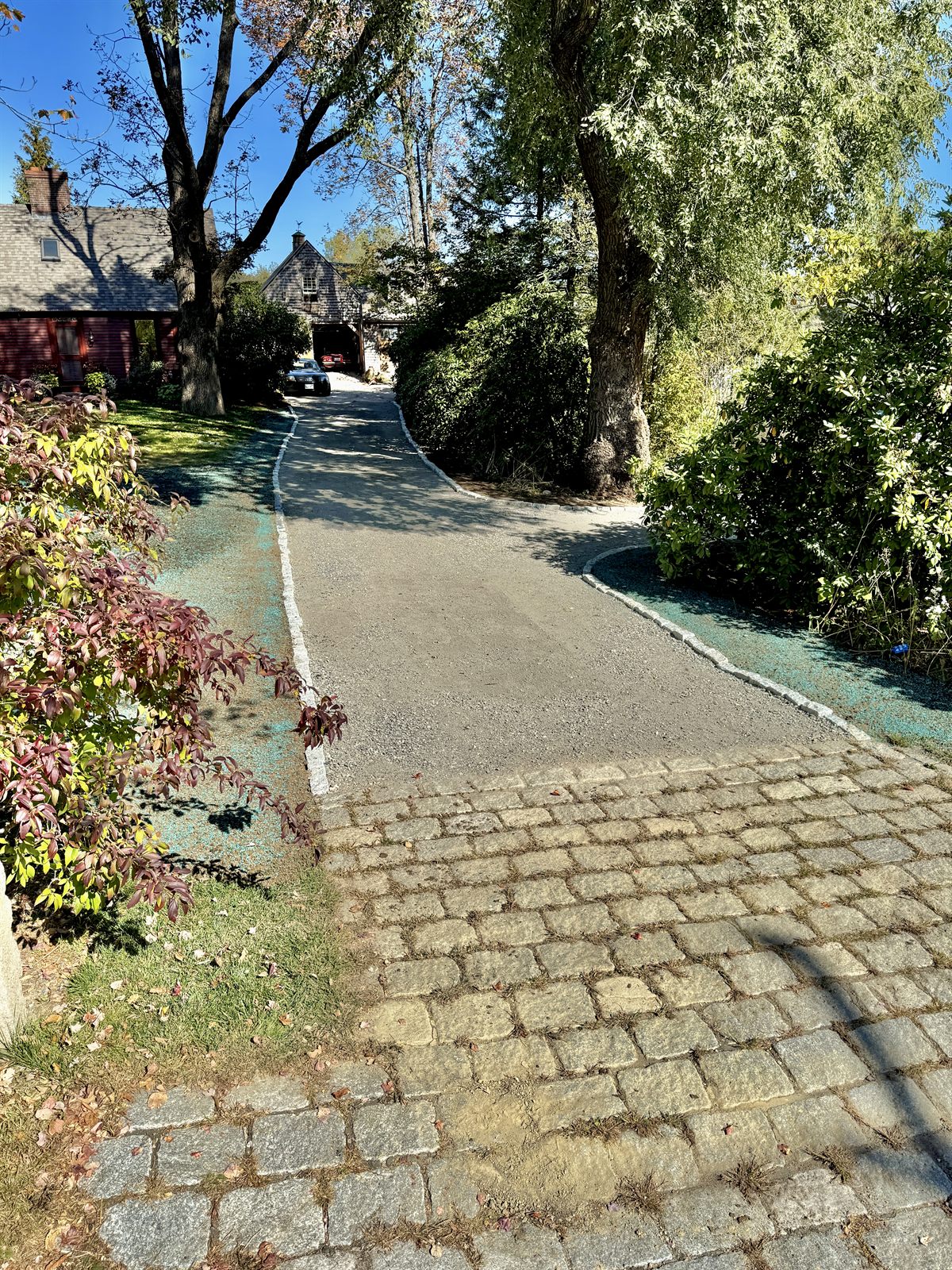
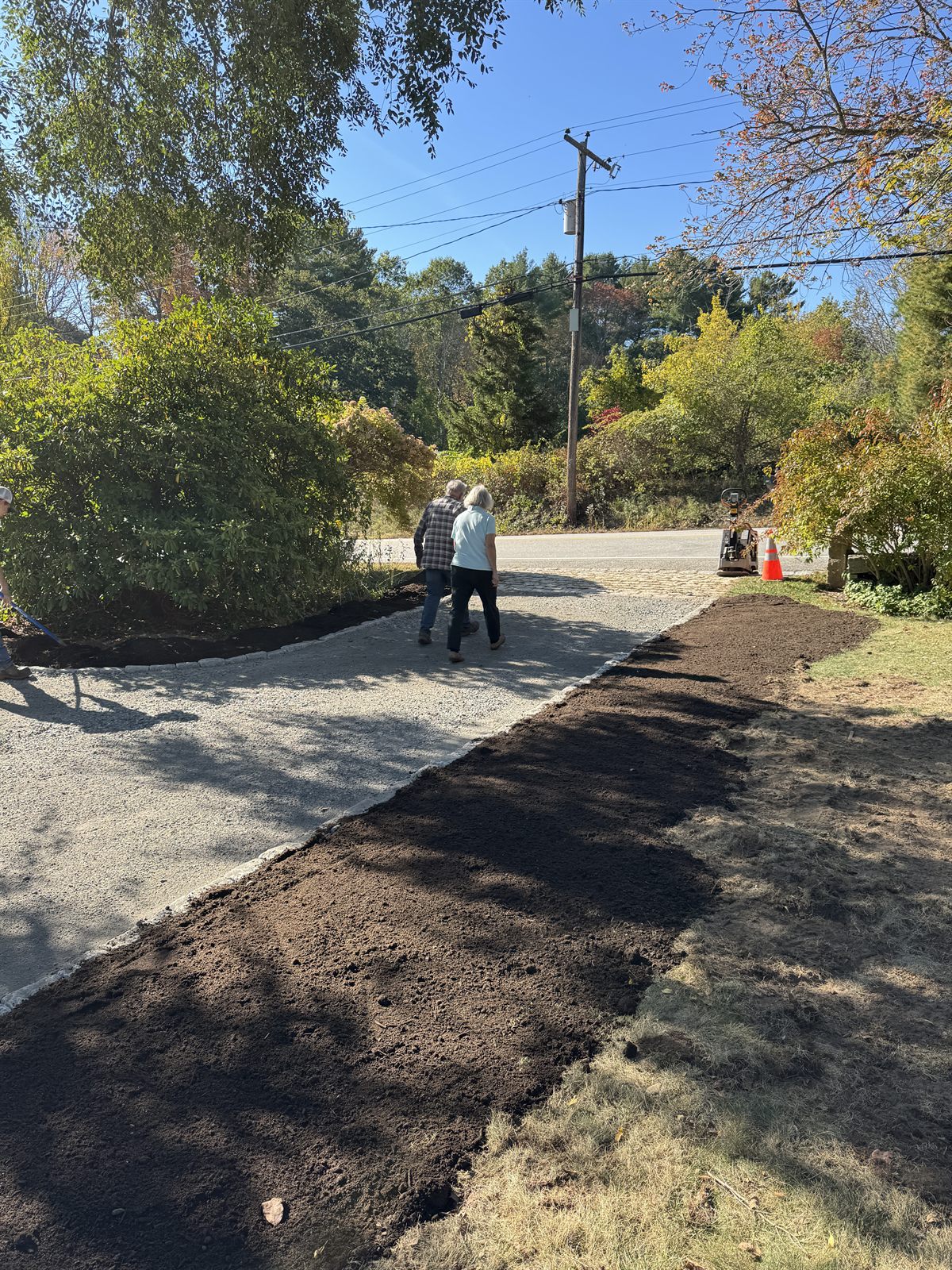
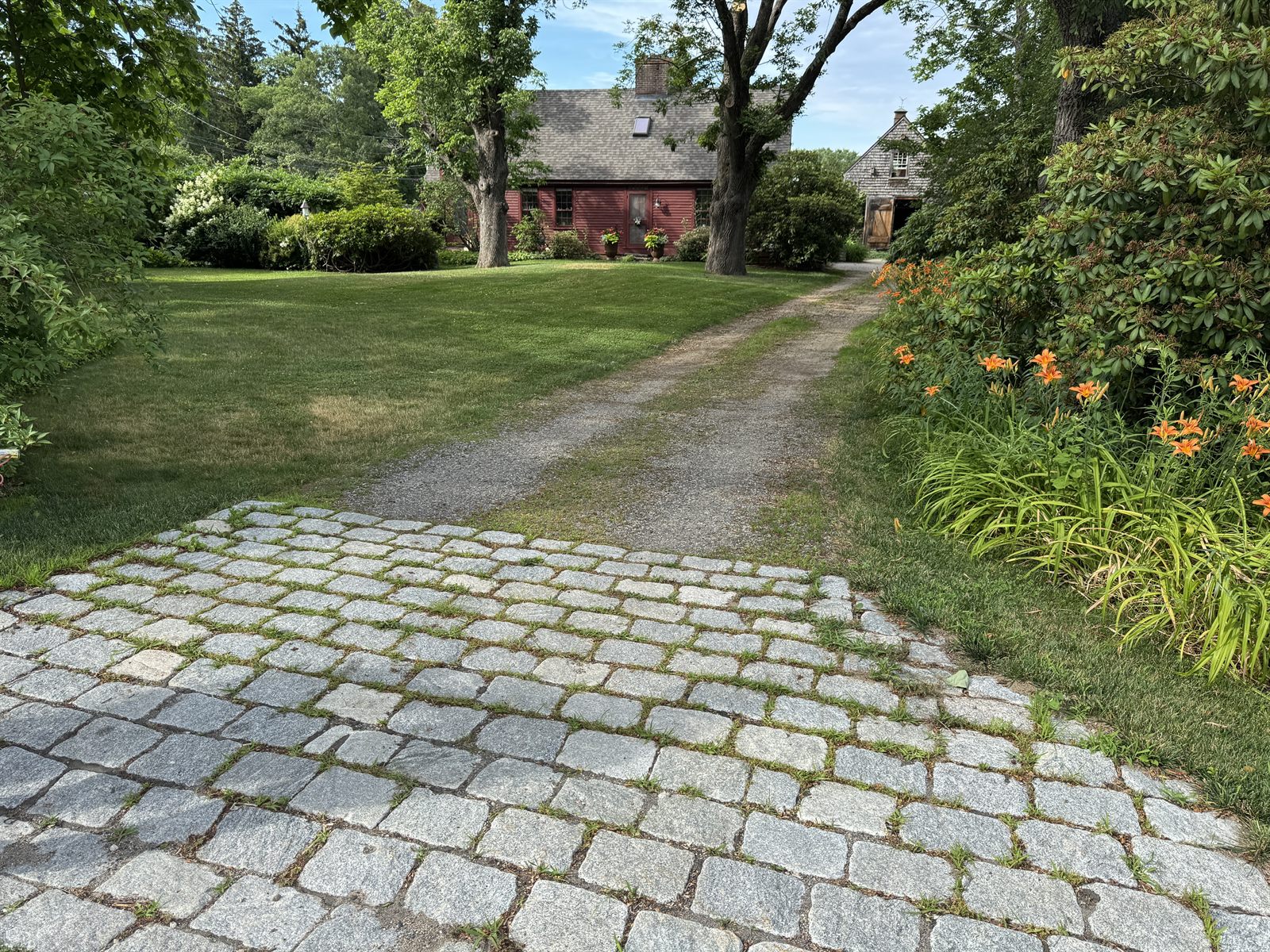
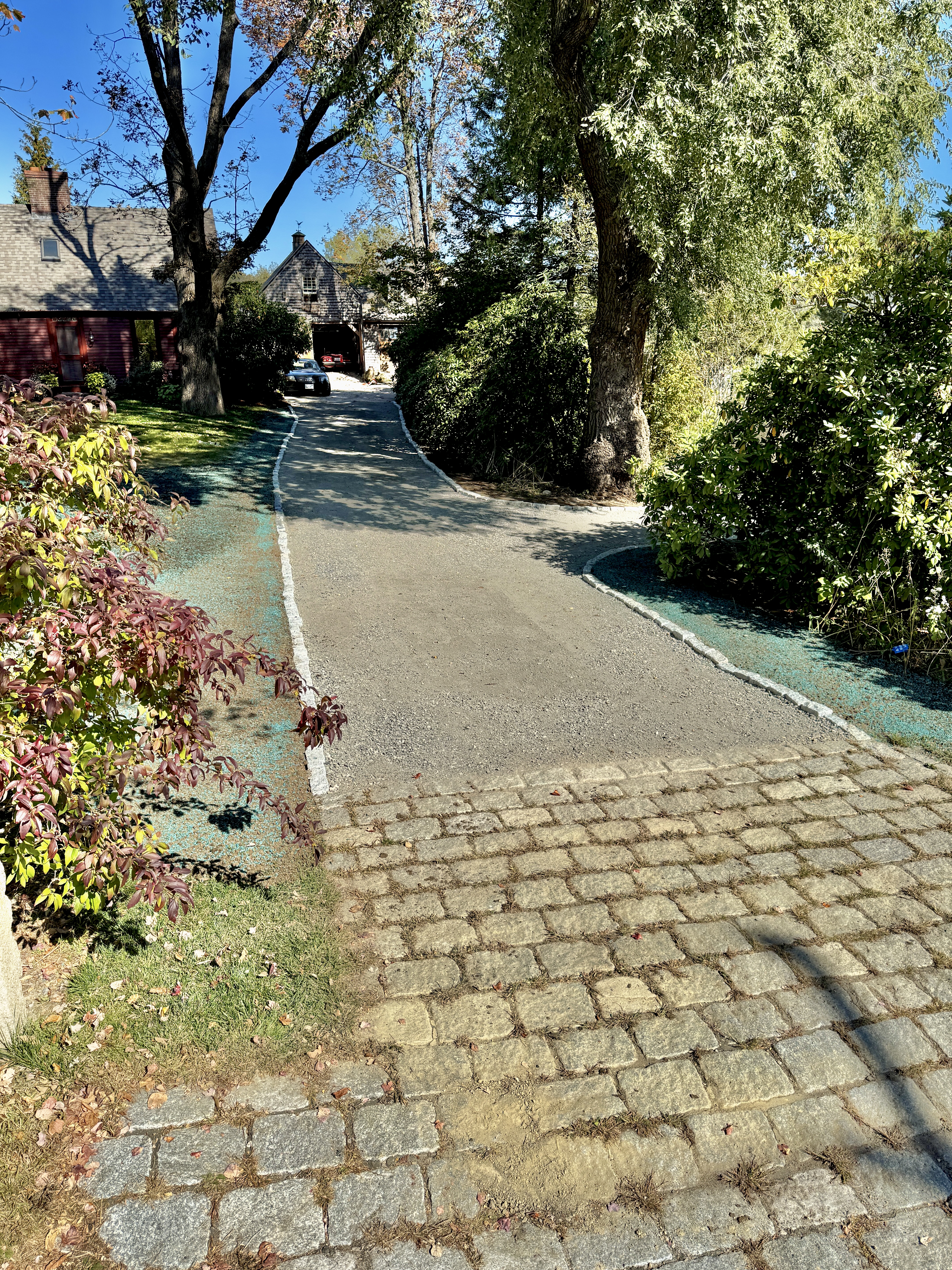
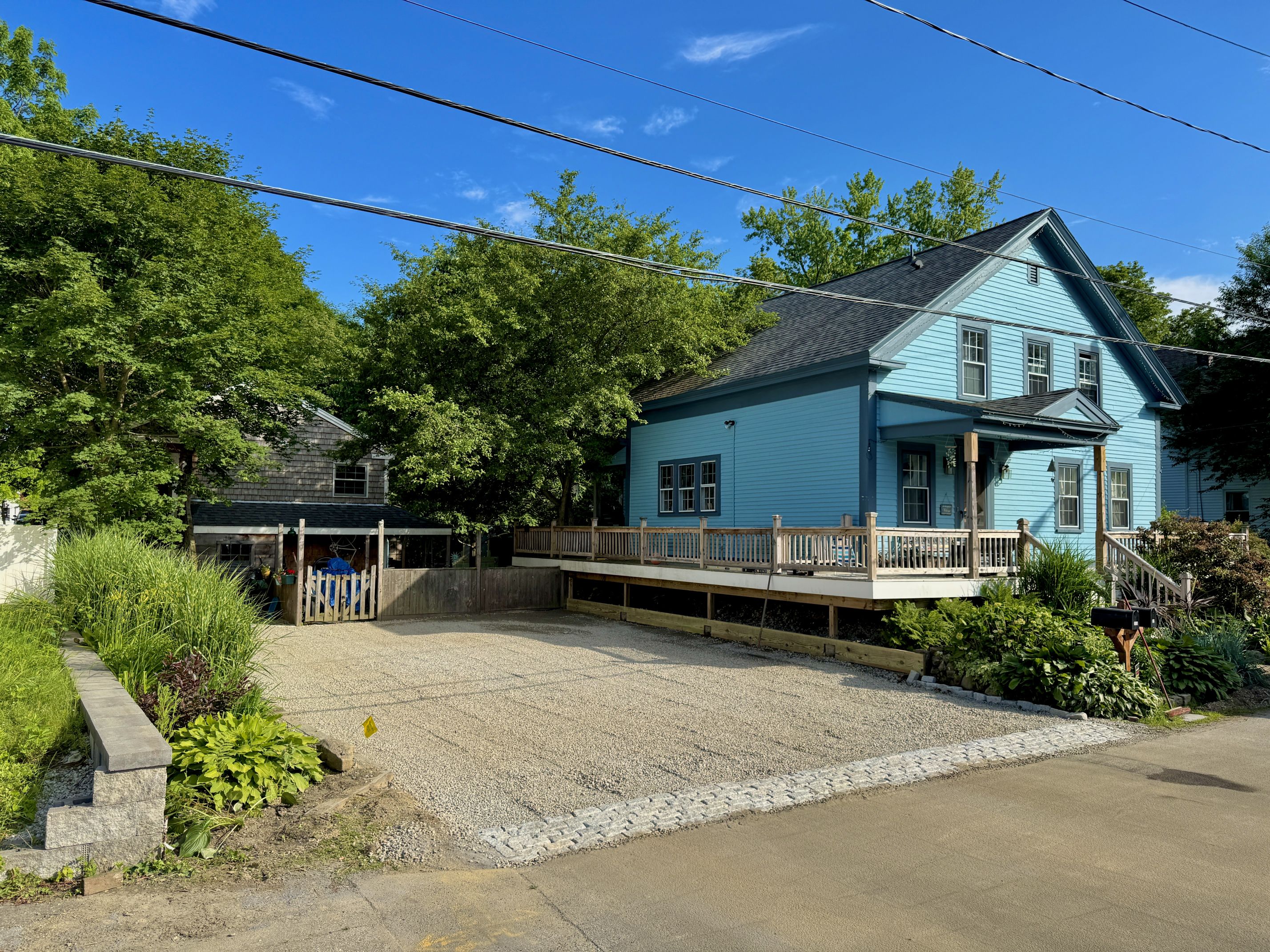
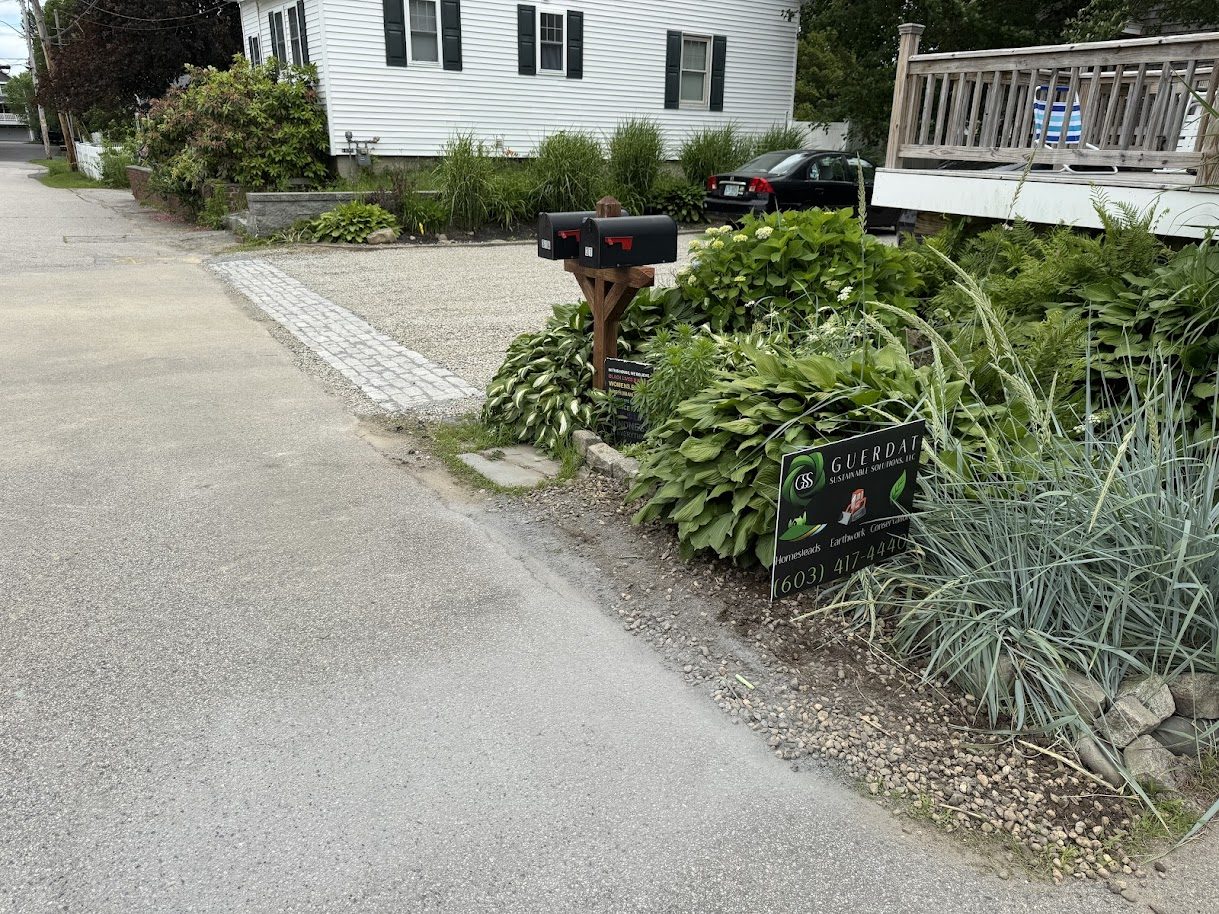
A proper crown sheds water instead of trapping it. Optional granite cobble aprons and borders look incredible and keep edges crisp for years.
What's Actually Under Your Driveway
Four layers, in this order, are the difference between a driveway you build once and a driveway you pay for every spring. Most "gravel driveway" bids you'll see skip the bottom two and just dump stone.
Why each layer matters
- Surface stone sheds water, locks together under tires, and stays comfortable to walk and drive on
- Base stone compacted in lifts (each one rolled, not just dumped) is the structural core. It engages the geogrid above and supports the surface. Skip this and the whole drive settles unevenly within two seasons
- Geogrid sits directly on the prepared subbase. It is the rebar of unpaved roads, locking the base stone into a stiff mat that bridges soft spots, spreads tire load across a much wider area, and prevents the base from migrating down into the soil below
- Subbase prep is the foundation. Strip organic muck and topsoil, work down to true mineral soil, compact it, and grade it. This is the layer most builds skip, and it's the reason you're buying gravel every year
Every layer is specified for your specific soil and traffic. A drive over heavy clay gets a different build than one on sandy coastal soil.
Free site visit, written scope, and a fixed price before any work begins.
What We Build
- New gravel driveway construction and full regrades
- Geogrid-reinforced driveways on soft or wet soils
- Forest access roads and farm lanes that survive mud season
- Property access for building lots
- Granite cobble aprons, borders, and transitions
- Cross-drainage culverts and surface-water control
Typical Driveway Ranges
The ranges below are typical for the Seacoast NH residential driveway work GSS does. Length, soil condition, access, drainage needs, and whether granite cobble is part of the picture all move the final number.
Drainage & Spot Repair
Failed tile drain, washout area, garage-entrance pooling, or one problem section. Focused intervention done right.
Starts around $3,500
- Excavation and failed-component removal
- Geogrid-reinforced rebuild over the problem area
- Angular stone surface, compacted in lifts
Granite Cobble Apron or Entrance
Curb-to-driveway transition that doesn't crumble. Add to an existing drive or build into a new one.
Starts around $4,500
- Granite cobble set on a compacted base
- Crisp recurved edges and true grade
- Holds shape for 15+ years with no annual maintenance
New Driveway (Geogrid + Multi-Layer)
Full new build or a complete regrade of an existing drive. Built once, not annually.
Typically $10,000 to $25,000
- Full four-layer build specified to your soil
- Proper crown and grading for drainage
- Optional cobble apron, culverts, edge treatments
The upper end of the new-driveway range can run higher on long drives, steep or ledge terrain, difficult access, and premium finishing elements such as extended granite cobble, decorative borders, or multiple culverts. Final pricing depends on driveway length, soil and drainage conditions, equipment access, and finish. All quotes are fixed-price or not-to-exceed before any work begins.
The Math on Annual Re-Gravel
A driveway without geotextile and geogrid does not stay where you put it. The stone pumps down into the mud through freeze-thaw, and you write a check for "a few more yards" every spring. That cost adds up faster than most people realize.
The annual re-gravel cycle
- 3 to 5 cubic yards of crusher run every spring
- Material, delivery, and spreading: typically $500 to $900 per year
- Ruts deepen, puddles return, edges keep crumbling
- 10-year cost: $5,000 to $9,000, and the drive is still degrading
- Every cycle is a half-day of your time managing trucks and grading
A geogrid drive built right
- Upfront build holds for 15 to 25 years before any major intervention
- Annual maintenance is occasional surface refresh, not structural repair
- Edges, crown, and surface stay where they were built
- Drainage works the way it was designed to work
- Stop scheduling a spring gravel truck for the rest of the time you own the property
Driveways & Access Roads
Build It Once, Build It Right
Todd will assess your soils and traffic and give you a written scope and price — free, within an hour of Newfields, NH.